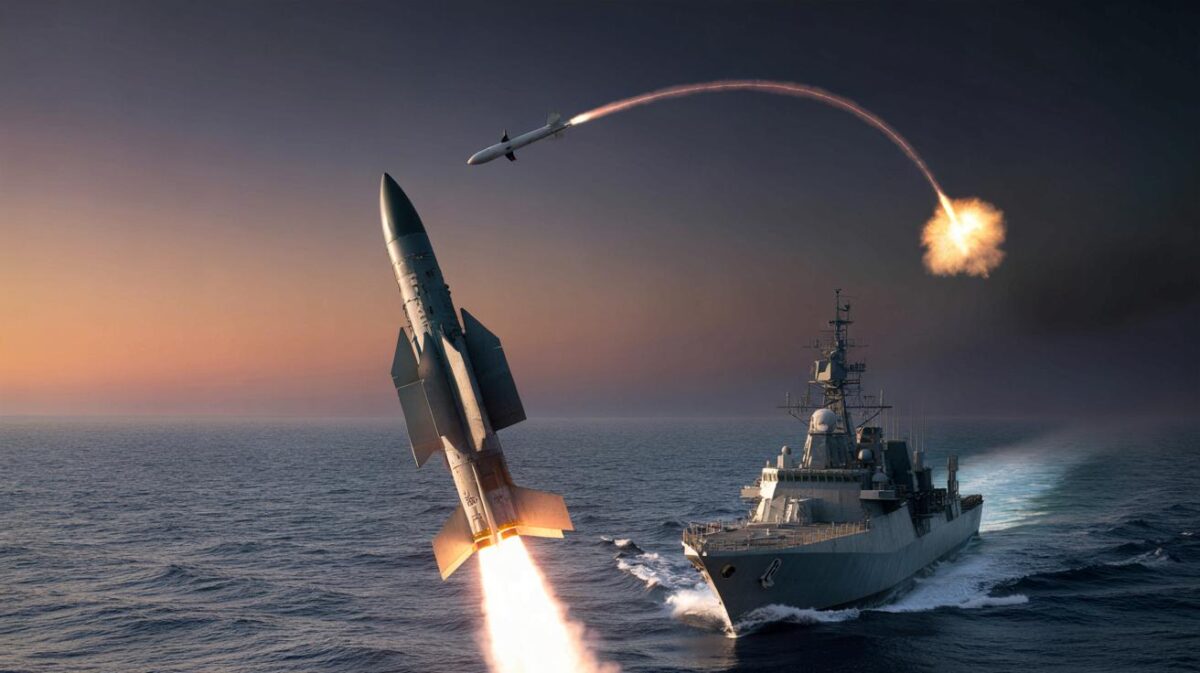
After years of watching its navy shrink back to home waters, Russia is working on a new high-seas combat ship that, if it leaves the drawing board, could push its flag back into contested maritime spaces from the Mediterranean to the Pacific.
A blue-water comeback taking shape in silence
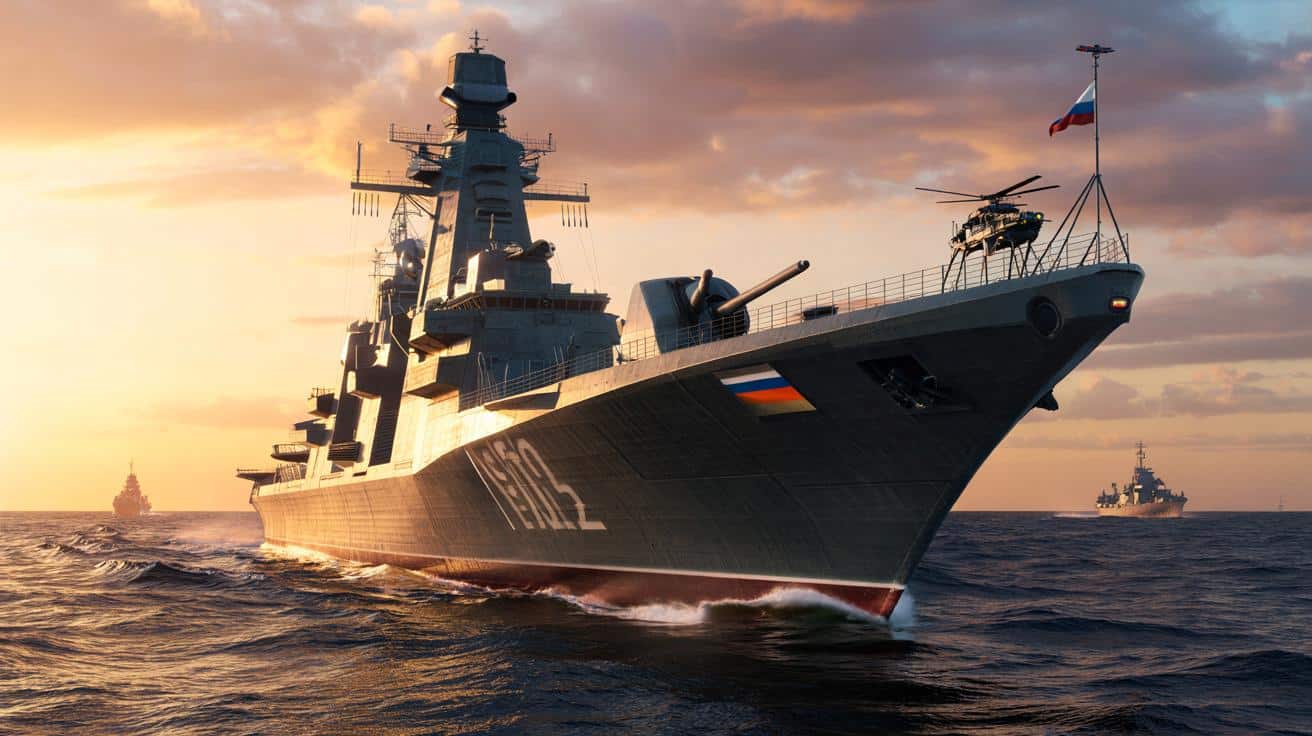
Russian military leaders have confirmed that a fresh surface combatant is under design, described not as a mere upgrade, but as a true ocean-going warship. This future vessel is intended to operate far from Russian shores, supporting task groups, protecting sea lanes, and projecting power abroad.
According to Admiral Alexander Moiseev, naval design bureaus have already received the brief. Engineers are now working through the final technical project phase, the moment when sketches harden into buildable plans. Only after this stage will Moscow be able to cut steel and commit shipyards, budgets, and political capital.
The current design phase will determine whether Russia can move from coastal defense to credible, long-range naval operations again.
For the Kremlin, this project carries more than symbolic value. A large ocean-going surface combatant signals that Russia does not accept being locked in its near seas by NATO pressure, sanctions, and geography.
From coastal defense to first-rank warships
Over the past decade, Russian naval strategy has narrowed. Moscow leaned on small, missile-armed corvettes, coastal defenses, and submarines to threaten nearby waters at relatively low cost. Those assets can launch powerful strikes but lack the endurance and presence of classic blue-water fleets.
The new project aims to reverse that course. Russian planners are again using the language of “distant ocean zone” operations, a Cold War term for stretching naval activity beyond home waters. The future ship is expected to sit somewhere between a large frigate and a destroyer or cruiser: big enough to carry serious firepower and sensors, but (in theory) still affordable in limited numbers.
A modular design to squeeze more value from each hull
Officials have not published hard specifications, but signals from Russian media and defence circles point to a modular design. That means the platform could carry plug-and-play combat systems tailored to specific missions.
Planned roles include:
➡️ Belgium’s “betrayal” of France will leave a mark on the future of Europe’s defence
➡️ France on track to become the world’s 4th biggest power in ultra-secret SIGINT spy aircraft
➡️ China is building the world’s largest laser crystal to shoot down satellites from the ground
- Long-range precision strike against land and sea targets
- Anti-submarine warfare with helicopters, sonar suites and torpedoes
- Air and missile defence for accompanying ships
- Electronic warfare and intelligence gathering
In practice, the same basic hull could leave port configured one month as a strike ship armed with cruise missiles, then reappear later with additional anti-submarine weaponry and sensors for a different mission profile.
A modular, multi-role ship would allow Russia to stretch limited industrial capacity, extracting maximum use from every large combatant it manages to build.
This approach mirrors trends in other major navies, where flexible weapon cells and open-architecture electronics reduce the need to design a new class for every role.
Global routes back on the Russian map
The project aligns with a clear political aim: reinsert Russian steel and sailors onto faraway maritime routes. Strategy documents and public comments from officials point to three main focus areas: the Mediterranean, the Indian Ocean and the Pacific.
In the Mediterranean, a larger Russian surface presence would backstop operations in Syria and keep pressure on NATO’s southern flank. In the Indian Ocean, it would support ties with partners such as India and potentially secure access near key chokepoints like the Red Sea. In the Pacific, it would complicate planning for the US, Japan and other regional players.
Russia’s aim is not to match US carrier strike groups ship for ship. Instead, the Kremlin seeks enough capability to act as a spoiler wherever Western navies operate.
Sanctions bite into engines and electronics
This ambition clashes with hard industrial limits. Since 2022, Western sanctions have sharply restricted Russia’s access to gas turbines, advanced propulsion systems, and high-end maritime electronics. These components lie at the heart of any modern destroyer-like warship.
Russian shipbuilders are trying to replace them with domestic solutions, but progress looks uneven. Previous large-surface projects in Russia have suffered from slow deliveries, engine issues and cost overruns. Adding a brand-new oceanic ship class into that mix raises real doubts about timing and scale.
Sanctions have turned propulsion and onboard electronics into the Achilles’ heel of Russia’s surface fleet modernisation.
Even if designers finalise a convincing blueprint, the jump from paper to metal will test Russian yards already under pressure from submarine production, repair backlogs and smaller vessel programmes.
A long-term gamble tied to Moscow’s budget cycle
Whether this “sea behemoth” ever sails depends heavily on Russia’s next State Armaments Programme, the multi-year spending plan that sets priorities for all branches of the armed forces.
The Kremlin faces hard choices. Drones, precision missiles, space systems and air defence networks all compete for funding. Large surface ships are expensive not just to build, but also to crew, maintain and modernise for decades.
| Key decision point | Impact on the project |
|---|---|
| Inclusion in the State Armaments Programme | Unlocks long-term funding and shipyard slots |
| Priority vs. drones and missiles | Determines whether only a few or several hulls are ordered |
| Domestic engine development | Sets realistic construction pace and technical limits |
| Political calendar up to late 2020s | Shapes how far the Kremlin wants to project power at sea |
Russian media suggest that, if approved, the first keel could be laid sometime between 2026 and 2028. That would still place the ship’s entry into service in the 2030s at best, leaving a long period where intentions remain more visible than actual hulls.
A global surface fleet race gathers speed
Russia is not alone in betting on blue-water power. China continues to expand its destroyer and cruiser fleet. The United States is wrestling with how to replace ageing ships while adding unmanned surface vessels. India is ambitiously reinforcing its presence in the Indian Ocean, building its own large frigates and destroyers.
In that context, Moscow’s future high-seas combatant would not stand at the top of any naval ranking. Instead, its main effect would be to complicate planning for Western navies, forcing them to account for a more active Russian presence in multiple theatres.
Even a handful of capable Russian ocean-going warships could act as strategic irritants, tying down disproportionate Western resources.
For example, a Russian task group built around such a ship in the eastern Mediterranean might compel NATO allies to keep additional frigates and submarines in the area, reducing their flexibility elsewhere.
What “blue-water navy” really means
The term “blue-water navy” often appears in political speeches, but it has a concrete meaning for planners. A blue-water navy is able to operate far from home bases for long periods, with logistics, air defence, anti-submarine capability and secure communications.
That requires more than one impressive ship. It demands tankers, supply vessels, trained crews, reliable satellites and a network of friendly ports. Russia currently has pieces of that system, but not yet a robust, sustained global posture.
The planned warship would act as a flagship for that ambition, yet the support infrastructure matters just as much as the hull itself.
Possible scenarios if the project succeeds
Analysts sketch several plausible futures if Russia manages to field this new vessel in significant numbers:
- Mediterranean shuttle: Regular Russian groups rotating through the Mediterranean, reinforcing bases in Syria and shadowing NATO ships.
- Indian Ocean presence: Periodic deployments near the Arabian Sea and East Africa to signal support for partners and watch Western sea lanes.
- Pacific chessboard: Joint exercises with China or independent patrols near key junctions like the Sea of Japan or the Philippine Sea.
Each scenario would stretch Western navies a little thinner, especially at a time when many European fleets are still recovering from years of underinvestment.
Risks, trade-offs and what to watch next
For Russia, the main risk lies in overreach. Pouring funds into a handful of large surface ships could drain resources from cheaper systems that have proved highly effective, such as land-based missiles and drones.
Western planners, for their part, must beware of underestimating a navy that has been bloodied but not broken. A single new class will not transform Russia into a maritime superpower. Yet a gradual combination of modern frigates, upgraded submarines and one or two ocean-going flagships could still alter local balances in contested regions.
Three signals merit close attention over the next few years: announcements on domestic gas-turbine production, any firm contracts signed with shipyards, and the allocation given to surface fleets in the next State Armaments Programme. Taken together, they will show whether this future sea behemoth remains a paper concept or starts its long journey from blueprint to ocean.