The latest firing of France’s ASTER B1NT air-defence missile has validated a long‑promised capability: hitting high‑speed, long‑range threats far beyond a fleet’s radar line of sight, and tightening Europe’s shield against Russian and Chinese weapons.
A test shot that sends a strategic message
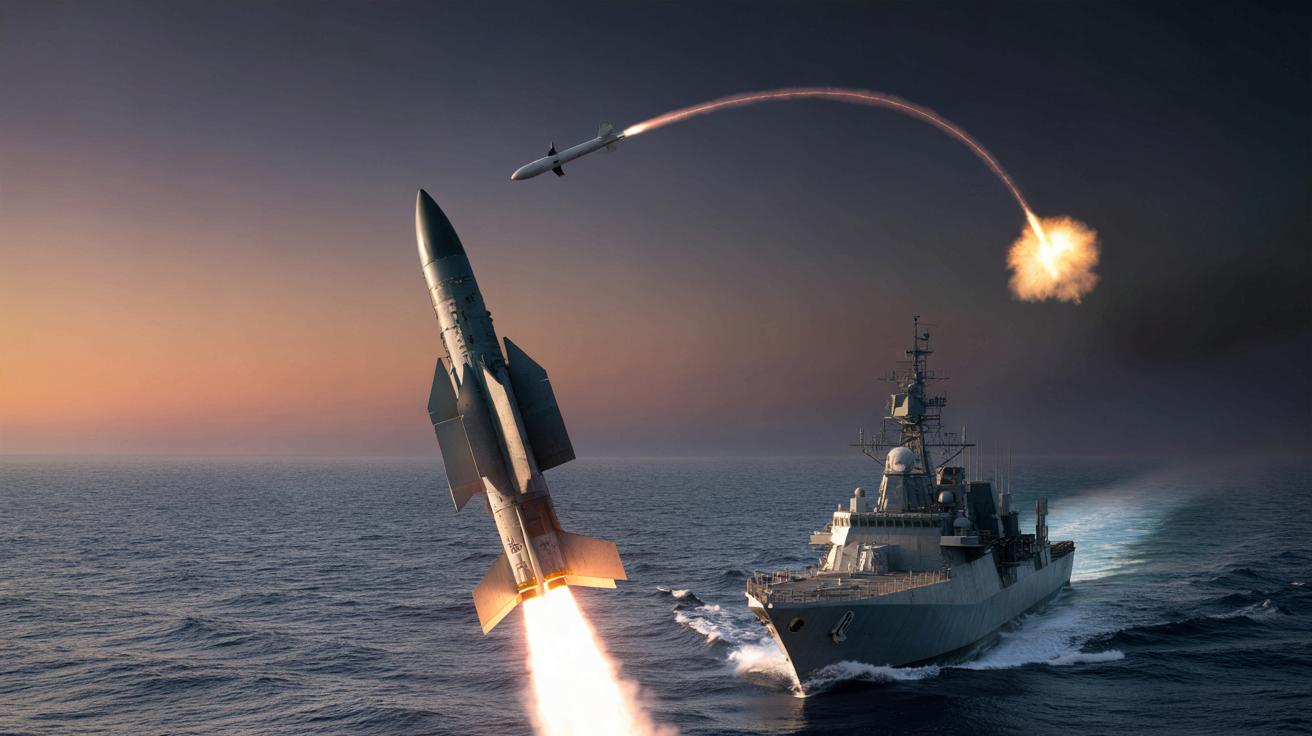
The trial, carried out in late July on a French defence test range, saw an ASTER B1NT intercept a target representing a long‑range missile.
Engineers confirmed engagement distances above 150 km and a higher interception altitude than previous versions of ASTER.
That kind of reach means a warship or ground battery can kill an incoming missile before it comes close to a port, air base or carrier group.
In geographical terms, a single B1NT shot covers roughly the distance between Paris and Reims.
The ASTER B1NT combines extended range with high‑altitude interception, pushing Europe into the small club of nations with credible ballistic missile defence.
French officials frame the test as more than a technical success.
It signals that Europe is moving from patchwork, medium‑range air defence to systems designed to handle the kind of long‑range, high‑speed strikes Russia and China have been showcasing.
A shared European project, not just a French story
ASTER B1NT is the latest member of the ASTER family, built by MBDA in partnership with Thales.
➡️ France on track to become the world’s 4th biggest power in ultra-secret SIGINT spy aircraft
➡️ Belgium’s “betrayal” of France will leave a mark on the future of Europe’s defence
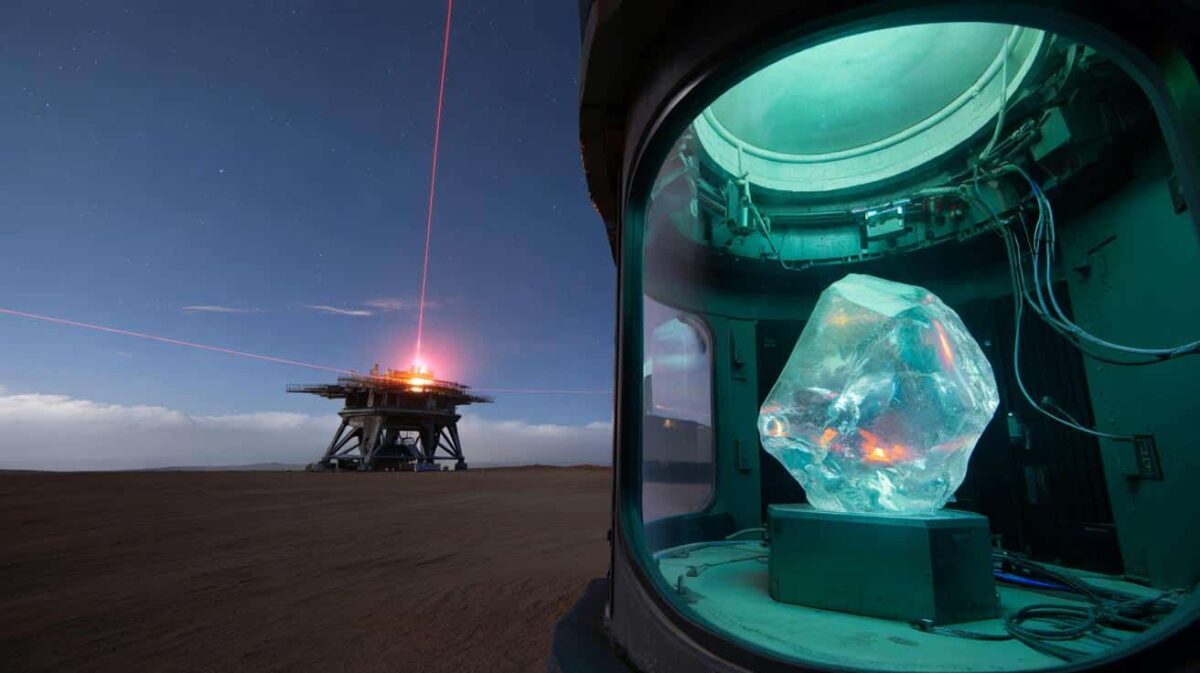
➡️ China is building the world’s largest laser crystal to shoot down satellites from the ground
Behind it sits a rare example of sustained European defence cooperation.
The programme is overseen by OCCAR, the joint armaments agency, and financed by France, Italy and the UK.
The missile will arm both land‑based SAMP/T NG batteries and advanced air‑defence frigates.
- France and Italy plan to use it to protect key air bases and cities.
- French and Italian navies will fire it from Horizon‑class frigates.
- The UK intends to bring it onto its Type 45 destroyers later in the decade.
This common missile pool reduces cost and simplifies logistics across several NATO fleets.
It also means that a French ship and an Italian ship, sailing together, will share not only tactics but ammunition.
Built for an era of hypersonic and ballistic threats
Where earlier ASTER versions focused on aircraft and cruise missiles, B1NT is tailored for ballistic missiles with ranges up to 1,500 km.
Those are the kind of weapons able to fly at several times the speed of sound, on high, arcing trajectories.
On paper, that places systems like Russia’s Kinzhal and Zircon, and China’s DF‑21D “carrier killer”, in its sights.
To achieve that, the B1NT swaps in a new guidance package.
Its seeker operates in the Ka band, which delivers much finer resolution than previous generations.
The Ka‑band seeker helps distinguish a real warhead from decoys at closing speeds above 6,000 km/h, a crucial factor against advanced missiles.
Missiles in this category have seconds, not minutes, to adjust course and strike a moving warhead.
That demands agile control surfaces, fast onboard computing and highly accurate radar tracking from the ground or ship as well as from the missile itself.
Deployment timeline: from firing range to frontline
The successful long‑range qualification clears the way for deliveries to France and Italy, and later to the Royal Navy.
| Milestone | Target date | Main users |
| Long‑range qualification | July 2025 | French procurement agency / Eurosam |
| Start of land‑based deliveries | 2026 | French Air and Space Force / Italian Army |
| Integration on Horizon frigates | 2027–2028 | French and Italian navies |
| Deployment on Type 45 destroyers | 2029 | Royal Navy |
Over time, B1NT will replace older ASTER variants, giving European forces an integrated ballistic missile defence (BMD) option they lacked for years.
For NATO planners, that offers a new tool to shield logistics hubs, ports and carrier groups in a crisis, without relying solely on US Patriot or Aegis systems.
From industrial setbacks to a rare bright spot
The B1NT’s success contrasts with some recent European defence disappointments.
France has struggled to upgrade its coastal protection and fast‑attack fleets, and the collapse of certain shipyard programmes has underlined weaknesses in the industrial base.
By bringing a complex missile to qualification on schedule, the ASTER team has given Paris, Rome and London a concrete argument that Europe can still deliver high‑end hardware in contested domains.
Ships upgraded to match the missile
A long‑range interceptor only works if the platform that fires it can see far enough and process data fast enough.
For that reason, France and Italy are mid‑way through a substantial overhaul of their Horizon‑class frigates under a joint venture called Naviris, linking Naval Group and Fincantieri.
These warships are set to receive new long‑range radars such as Thales’ SMART‑L MM, plus refreshed combat management systems.
On the French side, that means the SETIS system; for Italy, upgraded Athena/SADOC Mk 4 software.
With modern sensors and combat systems, the Horizon frigates shift from classic air‑defence ships to floating ballistic‑missile shields for carrier groups and coastal regions.
The same logic will apply to the UK’s Type 45 destroyers, already known for their powerful Sampson radars.
Once B1NT is integrated, they are expected to move beyond fleet air defence toward limited regional missile defence.
A missile family already tested in real conflicts
ASTER is not an unproven paper project.
More than 250 test firings have been logged, including around a hundred in operational contexts.
In recent years, ASTER missiles have been used to intercept drones and incoming missiles over Ukraine and in the Red Sea region.
French warships alone have fired over 20 ASTER rounds in the Red Sea, defending merchant shipping and naval units from attacks launched from Yemen.
The B1NT is built on that track record but extends the envelope in three areas: range, altitude and precision.
What changes for Europe’s strategic posture
The timing of B1NT’s arrival is not accidental.
Russia continues to use cruise and ballistic missiles against Ukraine and issues veiled threats toward NATO infrastructure.
China’s growing arsenal of anti‑ship and theatre ballistic weapons weighs on any future crisis scenario from the Baltic to the Indo‑Pacific.
A European‑built missile able to intercept ballistic threats out to 1,500 km changes planning assumptions.
Instead of treating ballistic strikes as a near‑unstoppable threat that only US assets can handle, European capitals gain a measure of autonomous protection.
That can free US systems for other regions and gives NATO more redundancy if bases or radars are hit early in a conflict.
Key concepts that shape missile defence
The ASTER B1NT story touches several technical ideas that often get lost in public debate.
Ballistic missile defence (BMD): This refers to systems designed to shoot down missiles that fly along a trajectory similar to artillery shells, but at far higher speeds and over far longer ranges. They usually leave the atmosphere, then re‑enter at very high speed.
Ka‑band seeker: Radar seekers work in different frequency bands. The Ka band offers higher resolution but can be more sensitive to weather. For B1NT, it gives the precision needed to spot small warheads among decoys.
Beyond‑line‑of‑sight interception: Because the Earth curves, a surface radar cannot see very far at low altitude. Long‑range intercepts rely on tall masts, external sensors, aircraft and satellites to feed data to the missile before its own seeker takes over.
Possible scenarios and limits
On paper, a carrier group protected by Horizon or Type 45 ships armed with B1NT could sail much closer to contested coastlines with reduced risk from certain ballistic threats.
A land‑based SAMP/T NG battery, deployed near a critical air base in Eastern Europe, could give commanders a way to keep runways open after the first wave of missile attacks.
That said, no missile is a silver bullet.
Adversaries can saturate defences with large salvos, mix ballistic, cruise and drone threats, or target radars and command nodes first.
For that reason, B1NT is likely to be used alongside other layers: short‑range point defences, electronic warfare, decoys and hardened infrastructure.
The real benefit lies in forcing an attacker to spend more missiles, accept higher uncertainty and face a more resilient set of targets.
In financial terms, each interceptor costs far more than a simple drone or rocket, so governments will also face tough choices about when to fire and when to hold back.